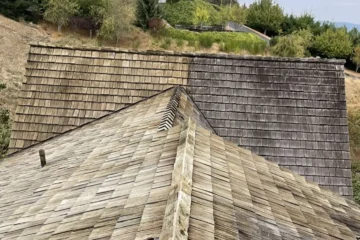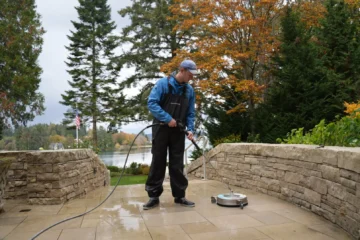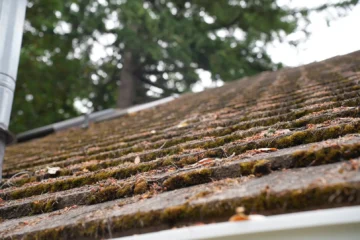

Most Pacific Northwest homeowners look at moss on their roof and see a cosmetic problem. Green on the shingles.
Looks a little rough, but you reason, “I’ll clean it up when I get around to it.”
Problem is, it’s not just cosmetic! That moss is making your roof its home.
- It is sending roots into your shingles
- As it expands, it slowly begins to lift the edges
- Holding moisture against surfaces that were designed to shed water, not absorb it.
By the time moss is visible from the ground, it has already been establishing for months.
This is the problem with moss in the Pacific Northwest. It does most of its damage quietly, while homeowners push out the work.
See It in Action
We’ve created a short video that shows you the process and how to prevent it.
Or, if you prefer, you can read the rest of the article below.
How Moss Establishes on a PNW Roof
Moss does not start in spring. It starts in fall.
The Pacific Northwest’s fall and winter conditions are ideal for moss establishment: sustained moisture, limited sunlight, and cool temperatures. Moss spores land on roof surfaces, find a foothold in the textured surface of shingles, and begin to grow.
By the time spring arrives and the moss is visible, it has had four to six months to work. The growth you see in March established itself in October. It spent the entire wet season developing a root system, not just sitting on the surface.
This matters because treatment and removal are most effective when they address what is visible. By the time moss shows up clearly from the street, the root system underneath is already doing damage.
What Roots Actually Do to Shingles
Composition shingles are not solid. They have texture, and that texture gives moss roots something to grip.
As roots develop, they work into the shingle surface and begin lifting the edges. Lifted shingle edges break the water-shedding seal that the roof depends on. Water gets underneath. Moisture that should run off the surface now sits against the wood decking below.
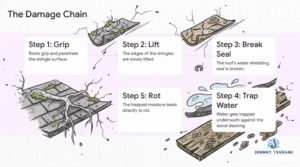
Sustained moisture against roof decking does two things. It causes rot. And it creates conditions for mold to develop in the attic space beneath.
Neither of those shows up quickly. A roof with active moss can look serviceable for a year or two while the damage builds underneath. By the time a leak appears at the ceiling, the problem has been developing for longer than that.
Why North and West-Facing Slopes Are Highest Risk
Not every face of a roof accumulates moss at the same rate.
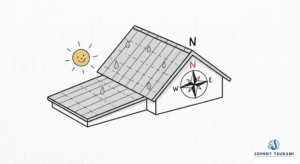
Moss likes certain roof types. Is yours one of them?
North and west-facing slopes dry slowest after rain. They receive the least UV exposure. In the Pacific Northwest, where overcast skies are the default for six to seven months of the year, these slopes can stay damp for days at a time after a rain event.
That sustained moisture is exactly what moss needs. South and east-facing slopes, which get more direct light and dry faster, accumulate growth more slowly. If you are assessing your roof and you see significant moss concentrated on one side, it is almost certainly the north or west face.
This also means that a roof inspection from the street may not give you the full picture. The heaviest growth is often on the face you cannot easily see from the ground.
The Treatment Window — Why Timing Is Not Arbitrary
Moss treatment is not effective year-round. The treatment window matters.
Soft-wash moss treatment works by applying a professional-grade cleaning solution that penetrates the moss root system. The moss needs to be actively growing and absorbing for the treatment to work as intended.
In summer, moss goes dormant. It stops absorbing. The same treatment applied in July does significantly less work than the same product applied in April or May. Dormant moss does not absorb solution readily, which means the roots survive and the moss re-establishes in fall.
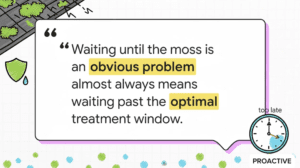
Spring is the optimal window. Moss is still active, still absorbing, and the root system is at its most vulnerable to treatment. Treating in spring also means the roof is protected heading into the dry season, when dormancy would have otherwise shielded the moss from treatment.
Waiting until the moss is severe enough to be an obvious problem almost always means waiting past the optimal treatment window.
The Cost Comparison That Makes This Concrete
A roof cleaning in the Pacific Northwest runs a fraction of what a full replacement costs. A roof replacement runs $15,000–$30,000 for a typical residential home, based on current Seattle-area contractor pricing for asphalt shingles. Larger homes, premium materials, or significant underlying damage from rot or mold push that number higher.
Preventative moss treatment runs a fraction of that.

The gap is not subtle. And the failure mode is predictable: moss establishes quietly, roots work into shingles over one to two seasons, moisture damage develops underneath, and the homeowner discovers the problem when a ceiling shows water staining or a roofing inspection reveals compromised decking. At that point, cleaning is no longer the only conversation.
Homes in the PNW with roofs that have not been treated in 12–18 months are in the window where that failure mode becomes likely. Not certain, but likely enough to be worth addressing while the cost is still in the hundreds, not the tens of thousands.
Frequently Asked Questions
Q: Is moss on a roof really a structural problem, or is it mostly cosmetic?
A: Moss is a structural problem. The root system penetrates shingle surfaces, lifts edges, and breaks the water-shedding seal that protects the roof deck underneath. Sustained moisture against the deck causes rot and can lead to mold in the attic space. The cosmetic appearance is a surface signal for what is happening underneath.
Q: How fast does moss damage a roof in the Pacific Northwest?
A: Moss can begin establishing a root system within the first season after spores land on the roof surface. Visible damage to shingles typically becomes apparent after 12–24 months of untreated growth. The PNW’s sustained moisture and limited UV exposure accelerate the process compared to drier climates.
Q: What is the best time of year to treat moss on a PNW roof?
A: Spring is the most effective window. Moss is actively growing during the wet season and absorbs treatment solution more readily when it is not dormant. Summer heat causes moss to go dormant, which reduces how well the treatment penetrates the root system.
Treatment, Prevention & Costs
Q: Will moss come back after treatment?
A: Yes, eventually. Moss spores are present in the Pacific Northwest year-round and will re-establish on untreated surfaces. Most treated roofs require retreatment every 12–18 months, depending on tree coverage, slope orientation, and sun exposure.
Q: Can I remove moss from my roof myself?
A: Manual removal from the ground or a ladder carries real fall risk and is not recommended for steep or multi-story roofs. DIY chemical treatments are available but vary significantly in effectiveness and can damage shingles if the wrong product or concentration is used.
Q: What does soft washing actually do that scrubbing or pressure washing does not?
A: Soft washing applies a professional-grade cleaning solution at low pressure that penetrates and kills moss at the root level, not just the surface. Pressure washing or scrubbing removes visible growth but leaves the root system intact, so the moss re-establishes faster.
Q: How do I know if my roof has moss even if I cannot see it clearly from the ground?
A: The high-risk indicator is roof age and orientation. If your roof has not been treated in 12–18 months and has significant north or west-facing exposure, moss is likely present even if it is not yet visible from street level. Dark streaking or discoloration on shingles is an early indicator.
Q: Does homeowner’s insurance cover moss damage?
A: Generally no. Insurance covers sudden and accidental damage, not gradual deterioration from lack of maintenance. Moss damage falls into the maintenance category. This is why preventative treatment matters: once the damage reaches the point of structural concern, the cost comes entirely out of pocket.
If your roof has not been treated in the last 12 months, the treatment window is open now.
Spring is when treatment is most effective. Once summer arrives and moss goes dormant, you lose the window until fall — and your roof spends another season with roots working into the shingles.
We serve the Pacific Northwest. A quote takes 60 seconds. No obligation.
[Get a Free Quote] — johnnytsunami.com/quote | Call or text (360) 440-6301