
Here’s something most homeowners get wrong about pollen season. Rain isn’t washing that yellow film off your siding. It’s bonding it on.
For three or four weeks every May, cottonwood, alder, big-leaf maple, and Douglas fir put down enough pollen across the Seattle metro to coat every horizontal surface in town. The reasonable assumption is that rain takes care of it, the same way it handles your windshield. Wash, repeat, move on.
That’s not what’s happening on your house.
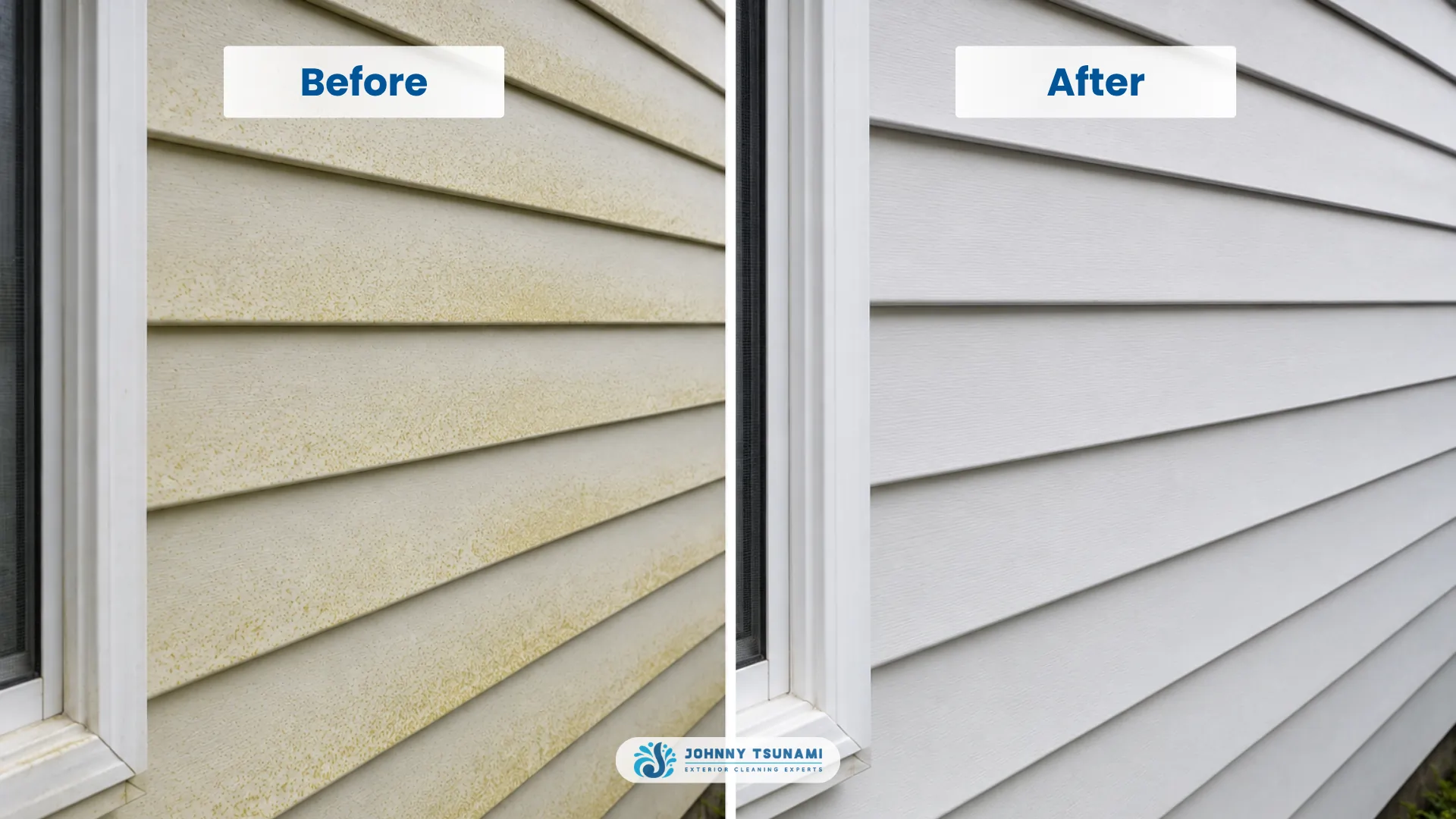
The catch is that pollen on siding acts like a sponge. It pulls moisture out of the air and traps it against the surface underneath. When rain hits a siding panel that already has a pollen layer on it, the pollen doesn’t rinse off. It soaks up the water, swells, and bonds harder. By June, what started as a removable dusting has turned into a layer that needs chemical release to come off cleanly.
So let’s walk through what’s actually going on under that yellow layer, why a hose-down doesn’t solve it, and how to spot the moment your home crosses from “looks dusty” to “needs a wash.”
What Pollen Actually Does to Your Home
Three Things Happening Under the Layer
While that pollen sits on your siding, three things are quietly developing at the same time.
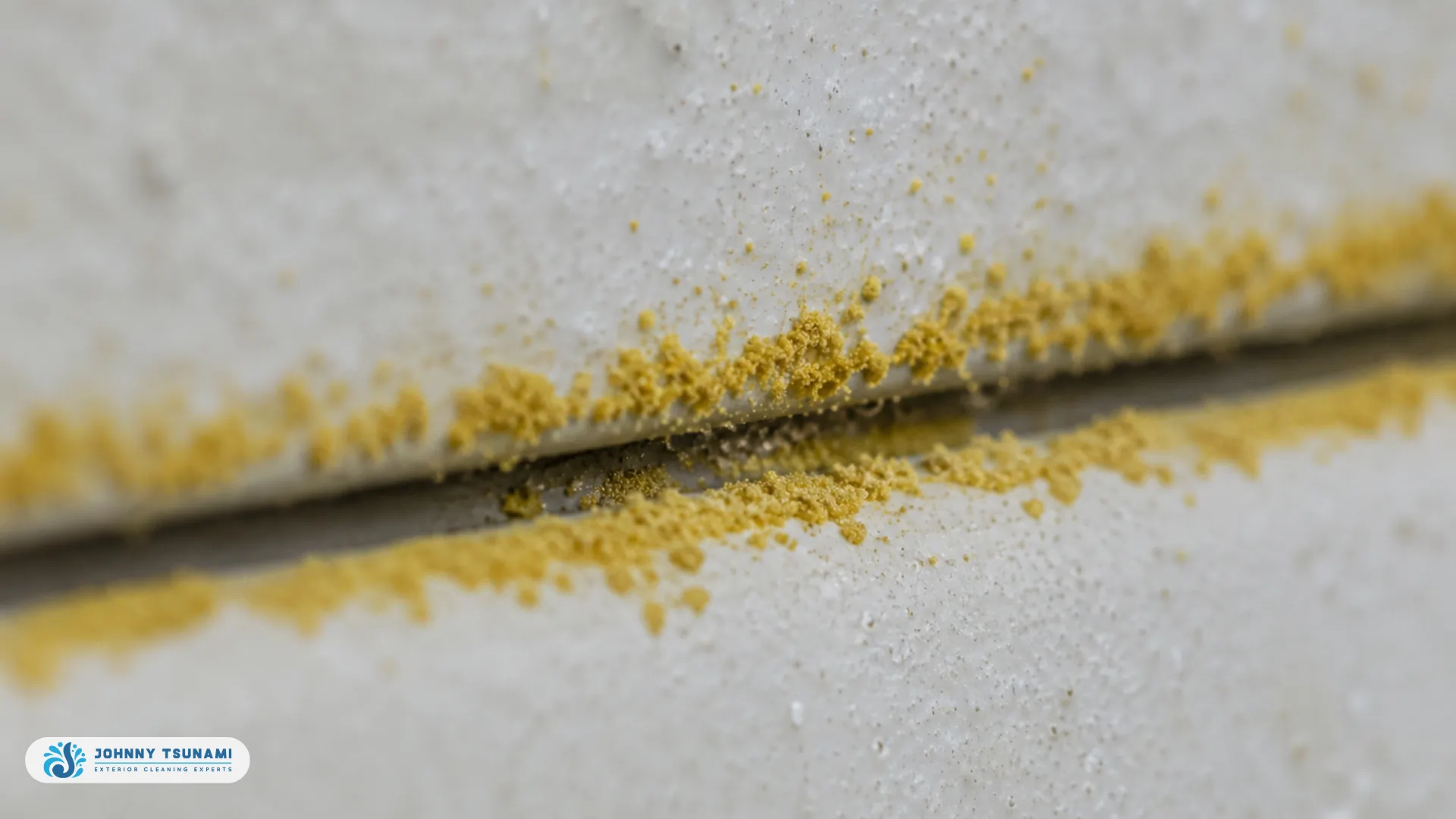
Your siding stays wet longer than it should. North-facing walls already dry slowest after rain in the PNW because they get the least direct sun. Add the moisture-trapping pollen layer on top and those walls stay damp for days. Sustained surface moisture is the precondition for algae and mildew, both of which set up in the same north-and-west pattern as the pollen itself. The yellow film you see now is what becomes the green tint you see in July.
Your window screens turn into pollen filters. Screen mesh traps the fine particulate faster than rain can rinse it through. Sliding window tracks pack with film that hardens as the weather warms. Screens that looked fine in March often need replacing by August on homes that didn’t get a window cleaning in May.
Your HVAC pulls the pollen inside. Every exterior intake on the building is feeding pollen into your filters and onto your coils. Filters that normally last 90 days clog in 30. Coil contamination from heavy pollen exposure can drop heat exchange efficiency by several percentage points until the system gets serviced. That indoor allergy spike that hits in late May? Often as much HVAC contamination as outdoor exposure.
Why a Hose-Down Doesn’t Handle It
First instinct is usually the obvious one. Hose the siding down, watch the yellow run off, call it done.
The catch is what stays behind. A garden hose moves the surface film, sure, but the bonded particulate is still there, stuck to siding, window frames, and screens. Once that bonded layer is set, the next wave of pollen builds right on top of it. By the end of May, you’re looking at a layer that won’t rinse. It has to be released chemically and lifted off.
Pressure washing is the wrong tool here, same as it’s the wrong tool for most siding work. The PSI needed to break a bonded pollen layer also forces water behind siding panels and damages soft surfaces. You trade one problem for a worse one.
The right move is a soft wash. Low pressure, professional cleaning solution that breaks down the bonded pollen chemically and rinses it away clean. The same method takes care of window frames, screens, and exterior intake covers in one visit.
What Leaving It Costs You
Letting the layer stay on through summer hits you in two places. Both are bigger than the wash itself.
First, paint and siding life. Surfaces that stay damp through May and June fade and degrade faster. Repainting a typical PNW home runs $4,000 to $10,000, depending on size and substrate. Soft washing every spring extends the life of the paint job and pushes that bill out by years.
Second, HVAC service cost. Filter replacement at 30-day intervals instead of 90 means three times the consumable spend. Coil cleaning, when the accumulated pollen contamination forces it, runs $200 to $400 per service call.
A professional house wash in the PNW runs a fraction of either of those numbers, and it handles the siding, the window frames, the screens, and the intake covers in one visit.
How to Tell If Your Home Has Crossed the Line
Five quick checks you can run on a Saturday morning. If two or more apply, your siding is past the point a hose will reach.
Run a finger along a horizontal seam on a north-facing wall in raking morning light. If your finger comes back yellow, the layer’s bonded.
Look at your window screens with the sun behind them. A yellow tint in the mesh means pollen is trapped in the screen.
Check your HVAC filter. If it looked clean in March and it’s loaded by early May, your intake is pulling serious pollen.
Look at your north-facing siding for a faint green or gray cast under the yellow. That cast means algae is starting to set up.
Notice indoor allergy symptoms that spike at home but ease up when you’re away. HVAC contamination is a common cause and one most homeowners miss.
If two of those check out, the next rain isn’t going to fix it. The bonded layer is in place and only getting harder to release. Time to plan a wash.
Right Timing for the Wash Depends on What You’re Optimizing For
Pollen season in the PNW isn’t a fixed window. Tree pollen is what bonds to your siding — cottonwood, alder, big-leaf maple, Douglas fir — and tree pollen tapers late May to early June. Douglas fir is the latest of the bonders. Grass pollen runs later but doesn’t bond the same way. So the question is what you want most.
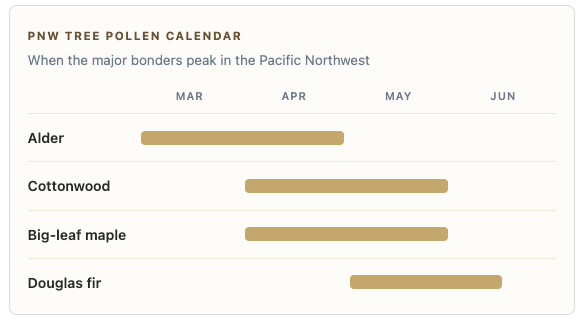
Major tree pollen seasons in the Pacific Northwest, including alder, cottonwood, big-leaf maple, and Douglas fir.
If Memorial Day entertaining is the priority, mid-May is the right window. A wash in the first two weeks of May resets the bonded layer in time for the holiday and the home looks clean for the first round of guests. Some additional pollen will land between the wash and June, but the result holds well enough through the weekend.
If pollen-clean siding through the summer is the priority, wait for the first week of June. By then, tree pollen has finished, and a wash holds longer because there’s no fresh wave landing on cleaned surfaces. The trade-off is the home doesn’t look fully reset for Memorial Day.
For most homes, the bonded layer is bad enough by early May that washing now is the safer call even with the small amount of additional pollen that lands afterward. Leaving the bonded layer through summer is the worse outcome. But if you’ve never had pollen issues and you’re not hosting in May, June is a defensible timeline.
Fresh Pollen vs. Bonded Layer
One thing worth being clear about: fresh pollen landing on a freshly washed home is not the same problem as a bonded layer. Fresh pollen is loose dust. It rinses with rain. The bonding only happens when pollen sits on damp siding through repeated moisture cycles, and that takes weeks. A May wash that gets new pollen in late May or early June will look slightly dusty heading into summer, but the dust stays rinsable. The damage agent — the bonded layer — is gone.
For roof, gutter, and window work, pollen timing matters less. Those services can run on their own schedule.
How Spring Cleaning Fits Together
For a full breakdown of how exterior cleaning fits into a proper spring sequence, see the correct order for spring exterior cleaning.
Frequently Asked Questions
Q: Will rain wash pollen off my siding?
A: No. Pollen is hygroscopic, meaning it absorbs moisture rather than rinsing away with it. Spring rain bonds the pollen layer to your siding rather than removing it. By the end of May, the layer needs chemical release to come off cleanly.
Pollen Bonding & HVAC Impact
Q: Why is the pollen worse on the north side of my house?
A: North-facing walls get the least direct sun in the PNW and dry slowest after rain. Slower drying means the pollen stays wet longer, bonds harder to the siding, and creates the moisture conditions algae and mildew need to establish. South-facing walls rinse cleaner because they dry fastest.
Garden Hose, Pressure Wash, or Soft Wash?
Q: Can I clean pollen off my house with a garden hose?
A: A hose removes loose surface pollen but leaves the bonded layer behind. After three or four weeks of pollen season, most PNW homes have a bonded layer that requires soft washing with a professional cleaning solution to release cleanly.
Q: Does pollen really affect my HVAC system?
A: Yes. HVAC intakes pull pollen-laden air through your filters and onto your coils. Filters clog faster, coils accumulate a film, and system efficiency drops a few points during heavy pollen weeks until the system gets serviced. Indoor allergy symptoms often trace back to HVAC contamination as much as outdoor exposure.
Timing, Treatment & Screens
Q: When does pollen season peak in the Pacific Northwest?
A: Late April through May. Cottonwood, alder, big-leaf maple, and Douglas fir all peak in this window. May is when bonded layers fully establish on most homes that haven’t been washed.
Q: When does pollen season actually end?
A: Tree pollen, the kind that bonds to siding, tapers late May to early June. Douglas fir is the latest of the major bonders and typically winds down by the first week of June. Grass pollen continues into July but doesn’t bond to siding the same way. For pollen-clean siding through the rest of summer, washing after tree pollen tapers (first week of June) is the cleanest timing.
Q: Should I wait until June to wash if pollen is the issue?
A: It depends. If Memorial Day entertaining matters, mid-May is the right window even though some additional pollen will land before June. If you have no May deadline and you want the longest-holding result, the first week of June after tree pollen finishes is better. Most homes benefit from the May wash because the bonded layer is already established.
Q: If I wash in May, won’t more pollen just land in the next few weeks and waste the wash?
A: No. Fresh pollen landing on a freshly washed home is not the same problem as a bonded layer. Fresh pollen is loose dust that rinses with rain. The bonding takes weeks of moisture cycles to develop. A May wash removes the layer that’s already causing damage, and any pollen that lands afterward stays light and rinsable, not bonded.
Wash Method & Maintenance
Q: Should I pressure wash my siding to remove pollen?
A: No. Pressure washing forces water behind siding panels and damages soft surfaces. Soft washing is the correct method for almost every PNW siding type and removes the bonded pollen layer chemically rather than mechanically.
Q: How often should I have my house washed in the PNW?
A: Most homes benefit from a full exterior soft wash once a year, ideally in May after pollen season peaks but before the bonded layer has time to host algae through summer. Homes with heavy tree cover may benefit from a second wash in early fall.
Q: Will a house wash also clean my window screens?
A: Yes. A professional soft wash treats screens, window frames, and exterior intake covers together. That’s part of why one visit handles the full pollen problem rather than requiring separate window cleaning services.
If your siding has that yellow cast right now, especially on north-facing walls, the layer’s already in place and getting harder to remove every week. The right time to wash depends on what you’re optimizing for. Mid-May for Memorial Day entertaining. First week of June for the longest-holding pollen-clean result. Either way, the bonded layer doesn’t go away on its own.
We serve the Pacific Northwest. A quote takes 60 seconds. No obligation.
[Get a Free Quote] — johnnytsunami.com/quote | Call or text (360) 295-4119