
Most homeowners think exterior cleaning is just a checklist. Do the roof, the gutters, the windows. Cross them off in whatever order makes sense at the time.
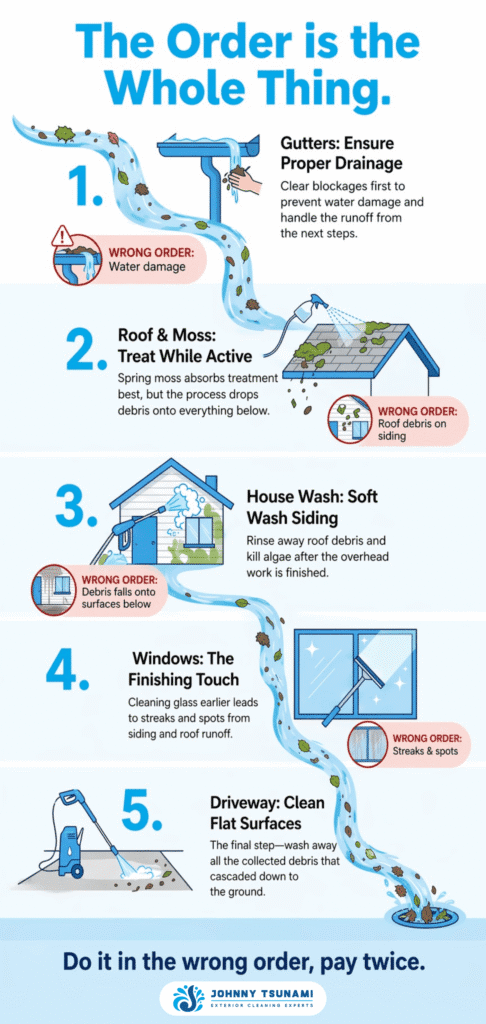
The order is the whole thing.
Get it wrong and you spend money on work that gets undone.
- Windows get dirty again before the crew even leaves.
- Siding gets hit with debris from the roof treated afterward.
The result is paying twice for the same job, or settling for a finish that is not actually clean.
This is not a rare mistake. And it costs PNW homeowners real money every spring.
What Goes Wrong When You Get the Order Wrong
The most common mistake: windows first.
A crew comes out, cleans every window on the house, does a great job. Looks perfect. Then the roof crew shows up the following week and blows debris, granules, and moss off the roof. It lands on the siding. Some of it hits the windows. Now the windows that were just cleaned need to be cleaned again.
If you hire the same company for both services, a good contractor will flag this before it happens. With different crews for different services, you are on your own to sequence it correctly. Most homeowners do not know to ask.
The second most common mistake: house washing before the roof is treated. You wash the siding. Looks great. Then roof work happens and debris and wash water run down the exterior. Now the siding needs to go again.
Each mistake is not catastrophic on its own. But they add up. Rework is real cost. More importantly, rework means parts of your home spent more time with the problem than they needed to. Moss debris sitting on clean siding is not just an aesthetic issue. Organic material holds moisture against the surface.
Start With Gutters
Gutters go first. Always.
The reason is structural, not cosmetic. Gutters are your home’s drainage system. When they are blocked, water has nowhere to go except sideways. It pushes behind fascia boards, into soffits, and toward your foundation. The longer they stay blocked through early spring rains, the more opportunity water has to find those paths.
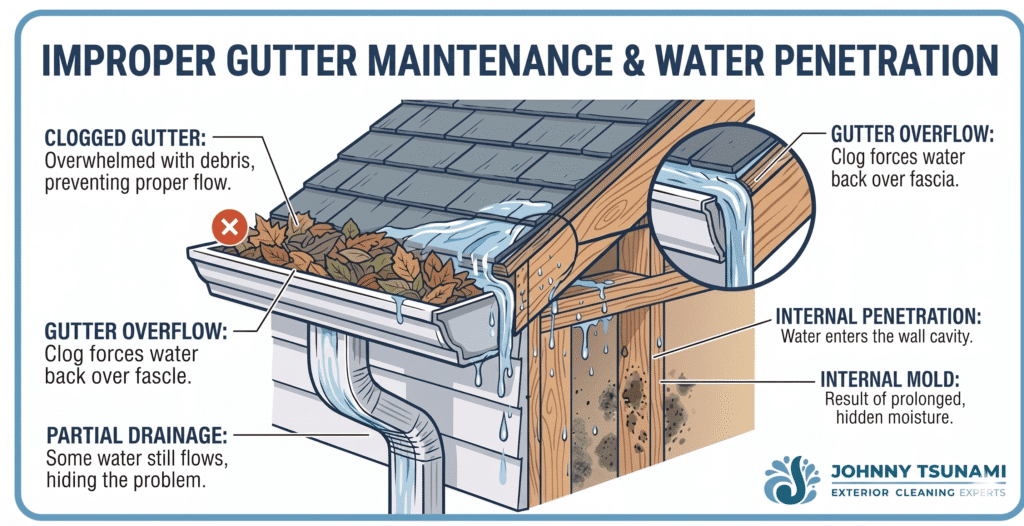
Water damage remediation in the PNW runs $1,500–$6,000 depending on where the water entered and how long it sat. A gutter cleaning costs a fraction of that.
Beyond the structural argument: clearing gutters first means downspouts are flushing correctly before any roof or siding work runs additional water through the system. You want to know the drainage is working before you add load to it.
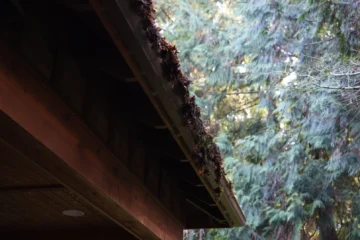
What goes into PNW gutters over winter: pine needles, leaf breakdown material, shingle granules, and organic debris from overhanging trees. By March, most gutters that have not been serviced since fall are carrying a significant load. The first heavy spring rain will find out whether they can handle it.
Roof and Moss Treatment Next
After gutters are cleared and downspouts are confirmed to flush, the roof is next.
For PNW homes, this means moss treatment specifically. Moss establishes in fall and winter on north and west-facing roof slopes. These faces dry slowest after rain and get the least UV exposure. By spring, moss that has been growing since October has had five or six months to work its way into the shingles.
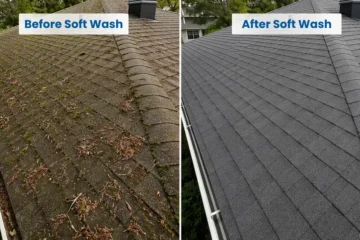
Treating moss in spring matters for two reasons. First, spring is when treatment is most effective. Moss is active and absorbing during the wet season. Treatment solution penetrates the root system when the plant is actively growing. In summer heat, moss goes dormant and does not absorb treatment as readily. The same product applied in July does less work than the same product applied in April.
Second, leaving treatment until summer means your roof spent another season with roots working into the shingles. Shingle damage compounds. A roof that needed a cleaning in April might need more involved remediation by September.
Roof replacement in the PNW runs $15,000–$30,000. Preventative treatment runs a fraction of that.
Roof work also produces debris. Moss, granules, and blowoff land on siding and surfaces below. You want this to happen before the house is washed, not after.
House Wash After the Roof Is Done
Once roof work is complete and debris has settled, the siding is ready.
PNW siding accumulates algae on north and west-facing walls. The same conditions that grow moss on the roof grow algae on the exterior walls. Limited sunlight, sustained moisture, organic debris. By spring, most homes have visible green growth on at least one face.
The right method for most PNW siding is soft washing. Low pressure, professional-grade solution that kills algae and organic growth at the root. Pressure washing siding is the wrong call in most cases. It forces water behind panels and can damage paint, wood, and the substrate underneath.
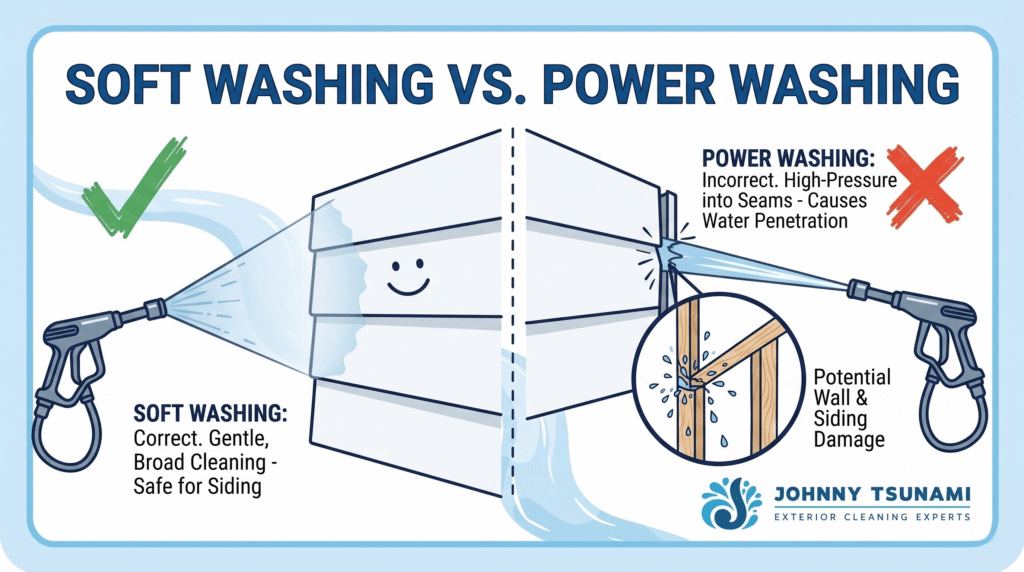
Soft washing uses low pressure to safely clean siding, while power washing can force water behind surfaces and cause damage. Timing the house wash after roof work matters because roof treatment and blowoff produce debris that lands on siding. Washing first and then treating the roof deposits that debris on freshly cleaned surfaces.
Windows Last
Windows are always last.
Everything above them produces debris. Roof work, siding wash, and gutter cleaning all throw material that can land on glass. Clean windows before any of that work is done and they will have spots, streaks, and debris before the day is over.
There is also a mineral deposit consideration specific to the PNW. Rain water leaves mineral deposits on glass over time. These deposits bond to the surface. The longer they sit, the more intensive the cleaning process needs to be to remove them cleanly without etching the glass.
Cleaning windows as the final step means the glass has the benefit of everything above being finished. Nothing lands on them afterward. The result holds.
The Correct Sequence
In order:
- Gutters. Clear debris, flush downspouts, confirm drainage is working.
- Roof. Treat moss before summer heat reduces effectiveness.
- House wash. Remove algae and siding buildup after roof debris has settled.
- Windows. After everything above is finished.
- Driveway and flat surfaces. Last, after all overhead work is complete.
One crew, sequenced correctly, is more cost-effective than multiple crews scheduled without coordination. If you are hiring different contractors for different services, build the sequence into your scheduling. Do not let separate crews set their own timelines independently.
Frequently Asked Questions
Q: Does it really matter if I clean my windows before the roof?
A: Yes. Roof cleaning and moss treatment produce debris including blowoff, granules, and wash water that lands on siding and windows below. Windows cleaned before roof work will have visible contamination from that debris. You would need to clean them again to get a finished result.
Q: How often should I have my gutters cleaned in the PNW?
A: Most Seattle metro homes benefit from gutter cleaning twice a year. Once in late fall after leaves have dropped, and once in early spring after winter debris has accumulated. Homes with significant tree coverage may need more frequent service.
Q: Is soft washing safe for all types of siding?
A: Soft washing is appropriate for most PNW siding types including vinyl, fiber cement, wood, and painted surfaces. The low-pressure application prevents the water intrusion that pressure washing can cause, and the cleaning solution treats organic growth at the root.
Q: When is the best time to treat moss on a PNW roof?
A: Spring is the most effective window. Moss is actively growing during the wet season and absorbs treatment solution more readily when it is not dormant. Summer heat causes moss to go dormant, which reduces how well the treatment penetrates.
DIY, Timing & Special Cases
Q: Can I do any of this exterior cleaning myself?
A: Gutter cleaning from the ground using a blower attachment is manageable for single-story homes. Roof work and soft washing carry real safety risks and can cause surface damage if the wrong pressure or solution is used.
Q: How long does a complete spring exterior cleaning take?
A: For a typical Pacific Northwest home, a full exterior cleaning from gutters through windows can be completed in one day with a full crew on site.
Q: What if I can only do one service this spring?
A: Prioritize based on what creates the most structural risk if left unaddressed. For most PNW homes, gutters carry the highest structural risk. Moss treatment carries the highest investment protection priority for the roof.
Q: Does the sequence change for different home styles or materials?
A: The core sequence holds for most residential homes. Homes with flat roofs have different drainage considerations. Cedar shake roofs require specific treatment approaches different from composition shingles. Mention non-standard materials when booking.
If your home has not had exterior maintenance in the last 12 months, spring is the right window. Once spring schedules fill, availability moves to summer. For moss treatment specifically, summer is when you lose treatment effectiveness.
We serve the Pacific Northwest. A quote takes 60 seconds. No obligation.
[Get a Free Quote] — johnnytsunami.com/quote | Call or text (360) 440-6301