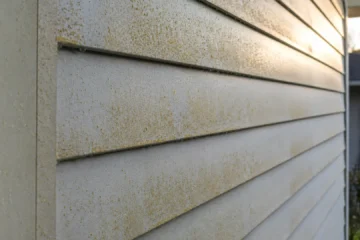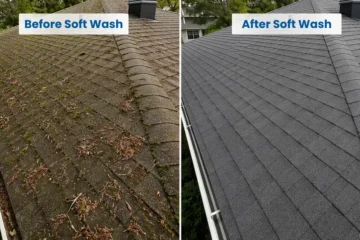

Nothing beats the first real sunny weekend in the Pacific Northwest. The clouds finally break, you drag the chairs out onto the deck, somebody is coming over Saturday. Then the light hits the house, and you see it the way your guests are about to. The moss creeping down the north side of the roof. The siding that drifted from white to some shade nobody picked. Windows wearing six months of rain. Welcome to summer.
Here is the good news. Summer is the one season that actually helps you fix all of it. The catch is that it gives you a short window to do it in. So this is a summer checklist, but not the usual pile of chores. It is built around what summer actually does to a Pacific Northwest home, the parts that help you and the parts that work against you, so you can spend your money where it counts and skip the rest.
Summer Is the Only Dry Window the PNW Hands You
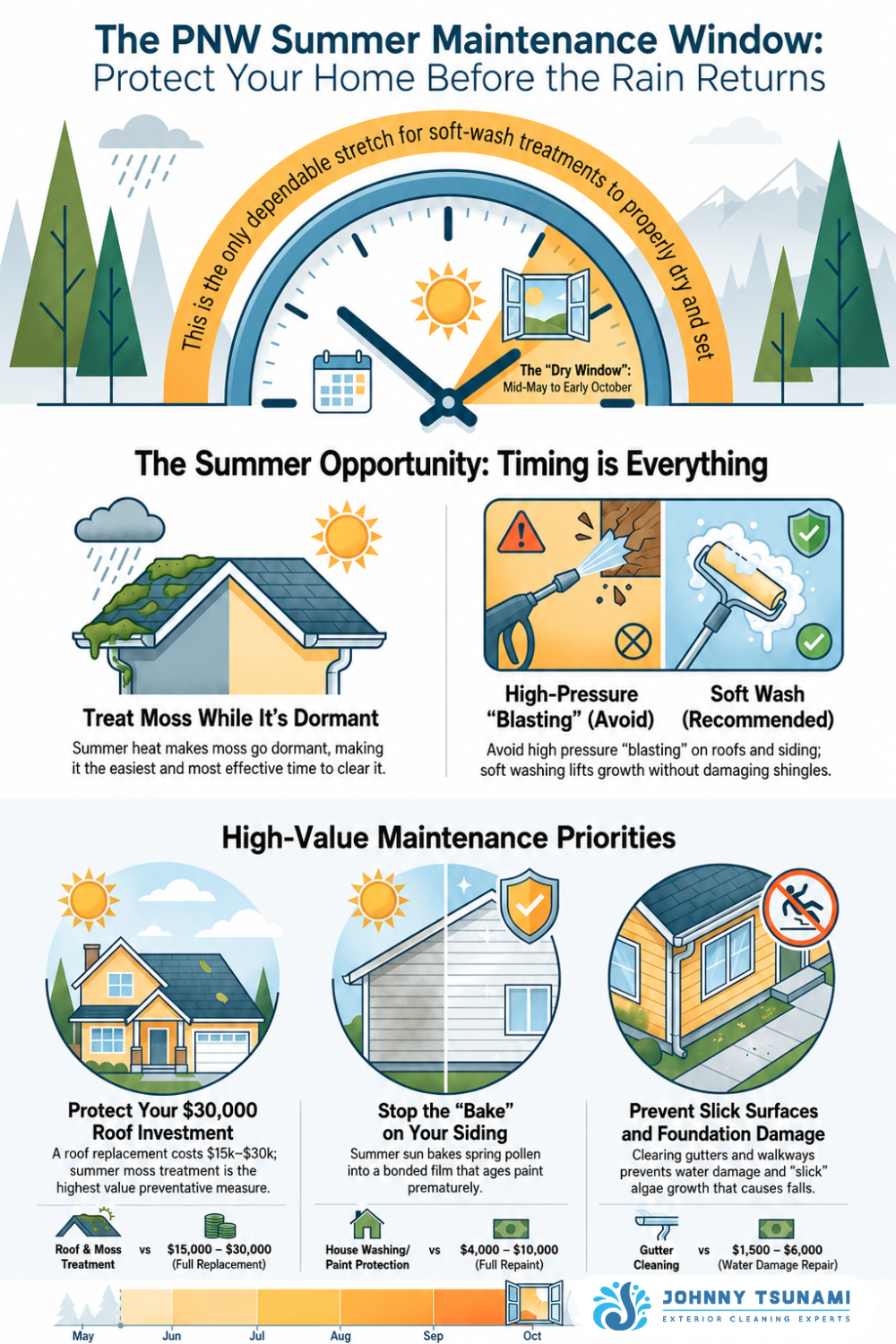
The Pacific Northwest gives you one dependable dry stretch a year, roughly mid-May through early October, and that window is the whole reason summer is cleaning season. Soft wash treatments work best with a stretch of dry days, so the solution can do its job before the next shower rinses it off, and siding and decks need to dry fast so the mildew does not just move right back in. Moss cooperates in summer too. It goes dry and dormant in the heat, which is the easiest time to clear it and treat it so it holds through the winter.
The catch is the window is short. Once the fall rains return, the moss wakes back up and comes back fast, and the dry stretch you needed to treat it is gone until next year. Handle it during the dry months and you stay ahead of the weather instead of chasing it.
Summer Cuts Both Ways: It Cleans, and It Bakes
Summer is a cleaning window, and it is also hard on the outside of your home. A dark asphalt roof on a sunny afternoon runs far hotter than the air around it, and months of that heat and direct sun wear on shingles over time. Hot days and cool PNW nights make everything expand and contract, and a long dry spell can leave wood trim and siding parched enough to crack.
None of that is a reason to panic. It is a reason clean surfaces handle the season better than dirty ones. A roof carrying moss and debris traps moisture against the shingles and ages faster. Siding wearing a film of bonded pollen bakes that layer on under the sun, and it only gets more stubborn the longer it sits.
After cleaning thousands of homes across the Seattle metro and Kitsap County, we see the same split every July. The homes cleaned early in the dry window coast through summer. Those that wait spend the season looking tired and aging a little faster than they should.
The Checklist: What Earns a Spot, and Why Summer Says So
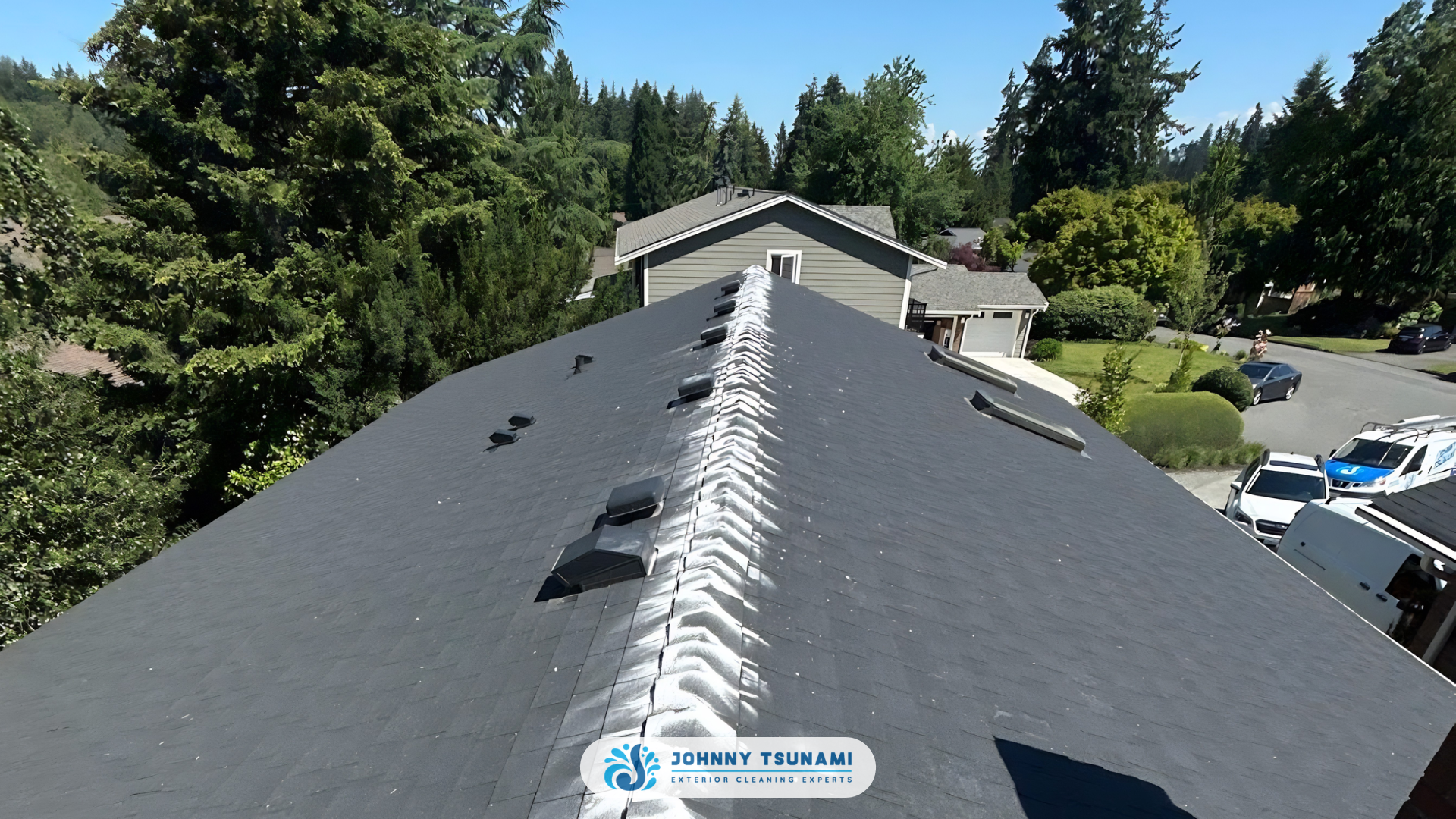
Here is what actually belongs on a PNW summer list, with the summer reason each one made the cut.
Roof and moss. Moss is dormant and dry in summer, which is the easiest version of it to treat, and the dry weather lets the treatment hold into fall. The tell: green fuzz or dark streaks on the shady slopes, or shingle grit showing up in the gutters. This is the big one. A PNW roof replacement runs $15,000 to $30,000, so catching moss while it is still cheap to handle is the highest-value thing on this page. More on our roof cleaning and moss removal pages, and the full story on what moss really does to shingles is here.
House wash. PNW tree pollen tapers in late May to early June and leaves a bonded film on your siding. Summer sun bakes it on, so the dry window is your chance to lift it before it sets, along with the winter’s worth of mildew hiding on the shady walls. If the siding looks dull, chalky, or green where the sun never reaches, that is the layer to clear. Do it right and you protect the paint, and a repaint on a typical PNW home runs $4,000 to $10,000. Method matters here, which is why we soft wash instead of blast. Service details live on our house washing page.
Gutters and Outdoor Surfaces
Gutters. A PNW spring dumps fir cones, twigs, and maple seed pods into your gutters, and on a treed lot they clog again before fall even shows up. Overflow stains on the fascia, or a little garden sprouting in the trough, means you are overdue. Clearing them keeps water headed away from your foundation, and water damage runs $1,500 to $6,000 against a fraction of that for a gutter cleaning.
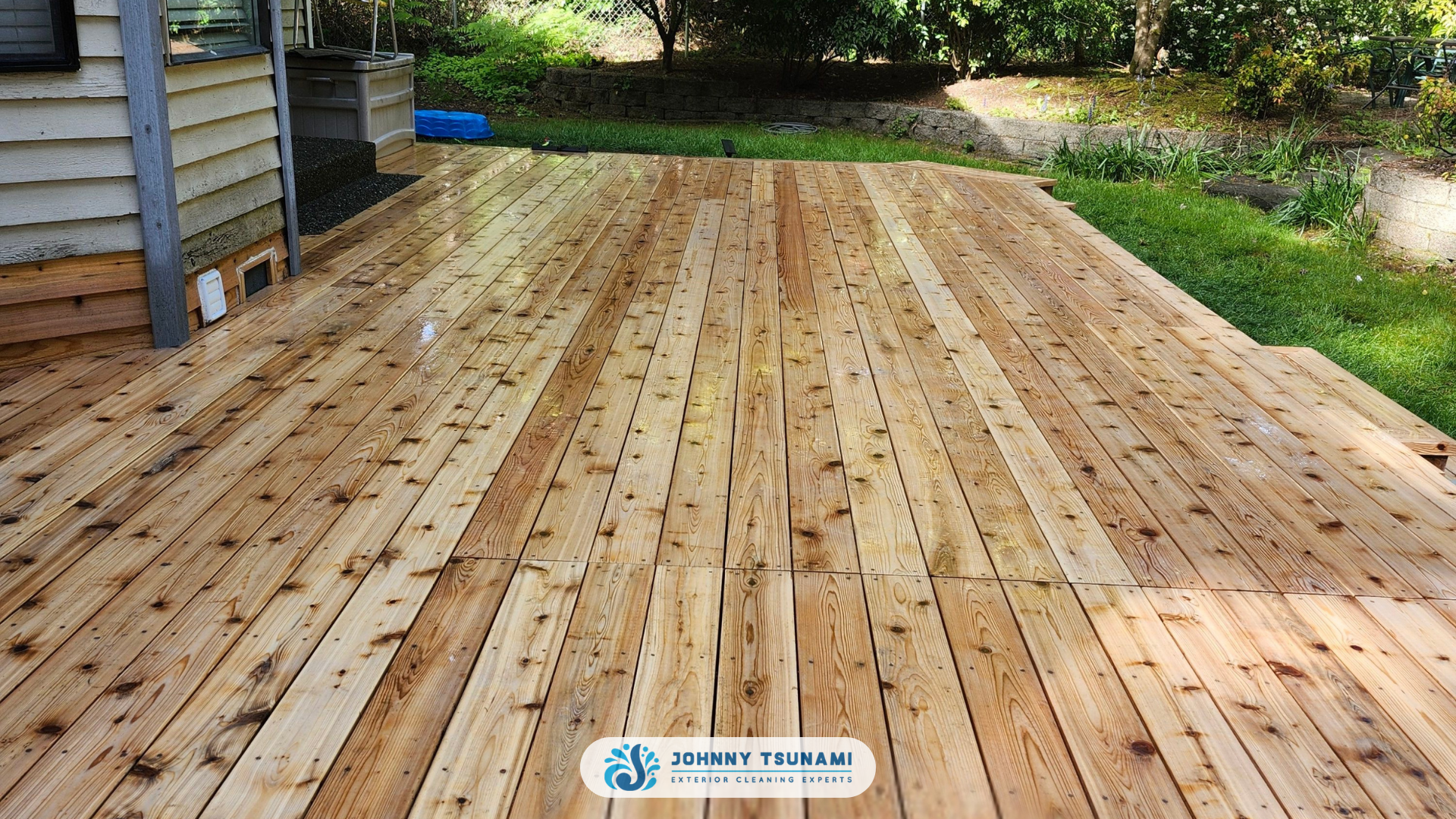
Deck, walkways, and driveway. These take the most foot traffic in summer, and they are the surfaces your guests actually stand on. Algae and moss settle into the texture of concrete, pavers, and deck boards and turn them slick, which is a genuine fall risk, especially for older adults and kids. If a board feels greasy first thing in the morning or reads gray-green in the shade, that is living growth holding water, not just old wood.
Windows and Solar Panels
Windows. Summer light is gorgeous, and it shows every single streak. Clean glass is the fastest way to make the whole place read as cared-for before company arrives. If you are squinting through an afternoon haze, or the screens have gone gray, that is buildup the rain will not rinse off. See our window cleaning page, and the clean windows guide for why a pro result holds longer.
Solar panels. Dust and pollen on the glass quietly cut output in the exact months your panels should be working hardest, which is why the U.S. Department of Energy points to regular maintenance as key to keeping a system producing. A dip in production on a clear day is often just a dirty array, not a fault in the system. Steep or high panels are a job for a crew with the right gear, not a ladder and good intentions.

How to Know What Your House Actually Needs
You do not need every line on this list every summer, so let the house tell you. Walk it once. Start with the north-facing and shaded roof slopes, because that is where moss and algae get going first in the PNW. Did the gutters overflow in the last big rain, or is there a stain on the siding under a downspout? Run a hand along a shaded wall and see if it comes back green. Check the deck and walkways early, while they are still damp and the slick spots give themselves away.
For most people, the goal here is not to become a roof expert. It is to have the house look handled and stay protected without it turning into a project you have to manage. That is the quiet luxury of doing the walk once in summer. You find out what needs attention, you knock it out in the dry window, and then you stop thinking about it. One look, one quote, off your plate before anyone rings the doorbell.
Rather not climb up there? Plenty of homeowners don’t have the time, the ladder, or the urge to go poking around a wet roof, and that is completely fine. If that is you, we will take it off your plate. Give us a call and a Johnny Tsunami home care specialist will come out for a free inspection, walk you through what they find, and leave the decision to you. A lot of folks end up on an annual maintenance plan so they never have to think about it again. See how the annual plan works.
The One Summer Move That Backfires
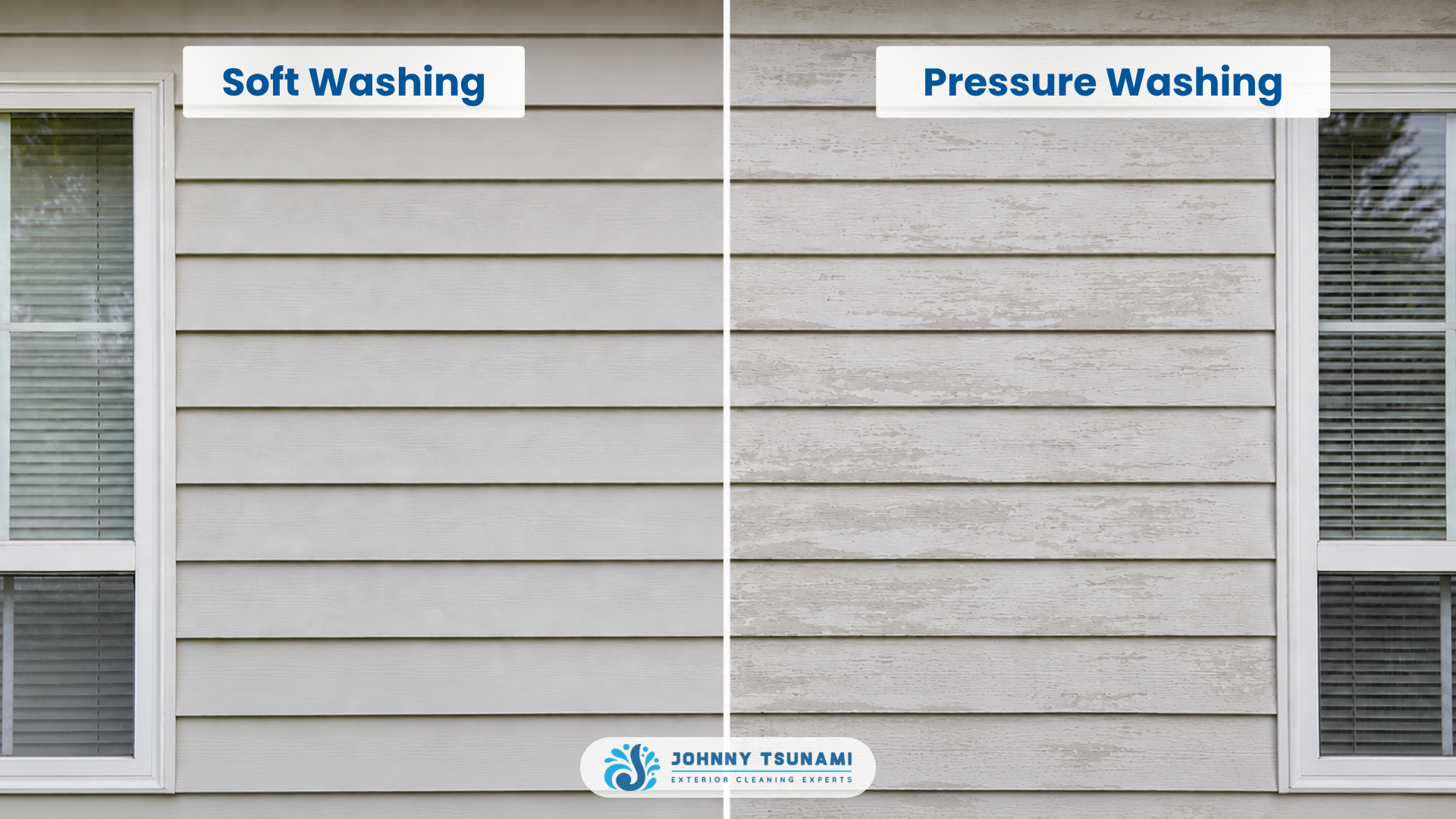
Summer is when half the block rents a pressure washer, and it is also when the most accidental damage gets done. High pressure feels like the thorough choice, but on a roof it blasts the protective granules right off the shingles and can void the warranty. The Asphalt Roofing Manufacturers Association explicitly warns never to pressure wash asphalt shingles. On siding it can force water behind the panels with nowhere to dry. On older wood it just leaves a splintered fuzz. The house looks great for a week and costs more to undo than the right job would have.
For most PNW exteriors the answer is a soft wash. Low pressure and the right cleaning mix lift the growth instead of beating it off. Pressure earns its keep on concrete and some pavers. It has no business on your roof or your siding. If you are sorting out how to clean this summer, the method matters as much as the timing, and we laid the whole thing out in our guide to soft wash versus pressure washing.
Want the place looking sharp before the Fourth, without spending your Saturday on a ladder? We treat roofs, siding, gutters, decks, and glass all over the Seattle metro and Kitsap County all summer. Grab a free quote. Takes about 2 minutes, no obligation.
Frequently Asked Questions
Q: When is the best time to wash my house in the Pacific Northwest?
A: Summer, during the dry window from about mid-May through early October. Surfaces dry fast, which keeps mildew from moving back in, and treatments hold instead of getting rinsed off. It is also the time to clear the pollen film before summer sun bakes it onto the siding.
Q: Do I really need to clean my home’s exterior every summer?
A: Most PNW homes benefit from an annual house wash and roof check. Gutters depend on tree cover, once or twice a year for shaded lots. Decks and windows follow how much you use them. A quick walk around the house each summer tells you what actually needs attention.
Q: Can I just pressure wash everything myself?
A: High pressure damages shingles, strips wood, and can drive water behind siding. Most PNW exteriors should be soft washed, which uses low pressure and the right cleaning solution instead of force. Roofs in particular should never be pressure washed.
Booking, Sun, and Gutters
Q: How far before a party or the Fourth of July should I book?
A: Give yourself a few weeks. You want the work done in the dry window and finished before your event, so reserving ahead gets you the date you want instead of whatever is left. The earlier in summer you book, the more flexibility you have.
Q: Does summer sun actually damage my roof?
A: Heat and UV are hard on asphalt shingles over time, and hot days followed by cool nights make materials expand and contract. A clean roof handles the season better than one carrying moss and debris, which trap moisture and age the shingles faster.
Q: How often should I clean my gutters in the PNW?
A: At least twice a year for most homes, typically late spring and early fall. Lots with heavy tree cover often need a summer pass too, because fir cones, twigs, and maple seed pods keep dropping through the season.
Moss, Solar, and Cost
Q: Is moss easier to treat in summer or winter?
A: Summer. Moss goes dry and dormant in the heat, which makes it easier to clear, and the dry weather lets the treatment hold. Waiting until the fall rains return means faster regrowth and a harder, more expensive job.
Q: My panels are solar. Do those need cleaning too?
A: Yes. Dust and pollen on the glass can cut output during the months your system should produce the most. Steep or high panels are safest left to a crew with proper equipment.
Q: How much does summer exterior cleaning cost?
A: It depends on the home and which services you need. The point of cleaning is that it costs a fraction of what the damage costs. A roof replacement runs $15,000 to $30,000 and water damage from clogged gutters runs $1,500 to $6,000. A quote takes about 2 minutes.
Want the whole house looking cared-for before your summer guests pull up? Johnny Tsunami is the most reviewed exterior cleaning company in the Pacific Northwest, with 3,000+ five-star reviews, and we treat roofs, siding, gutters, decks, and windows across the Seattle metro and Kitsap County all summer long. Summer is the dry window, and it goes by fast.
[Get a Free Quote] — johnnytsunami.com/quote | Call or text (360) 761-6011. A quote takes about 2 minutes. No obligation.